Built in 1899 and home to the Vardy Community History Museum, the church is in the middle of major structural repairs. Here is what crews found, how the Board chose a permanent fix, and why we need your help to finish the work.
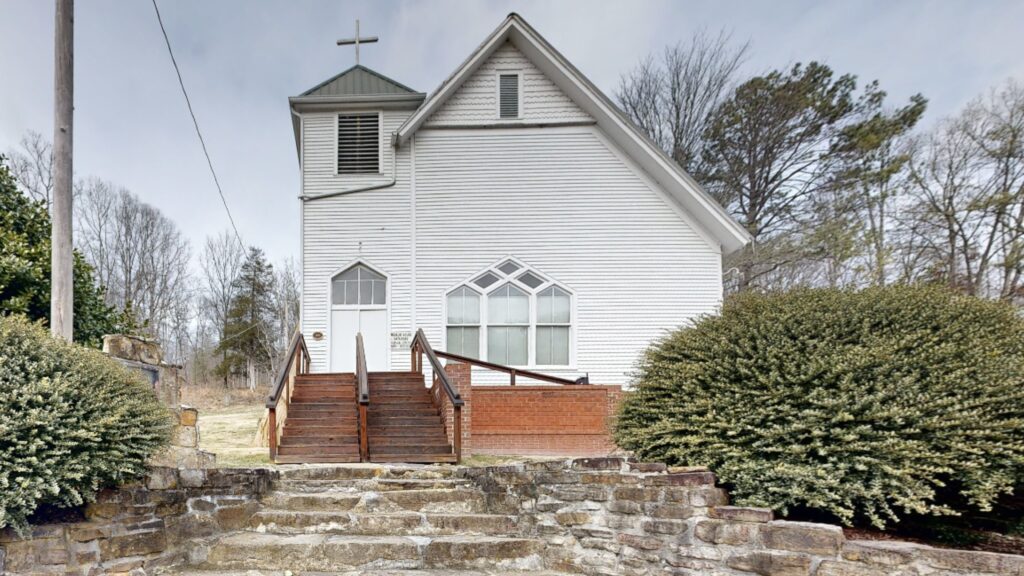
The historic Vardy Church was built in 1899 on Vardy-Blackwater Road in Sneedville, Tennessee. Today it serves as the Vardy Community History Museum and visitor center.
The Vardy Community Historical Society was formed and chartered in 1998 to preserve and display the historical properties and artifacts of the Vardy School Community Historic District, which is listed on the National Register of Historic Places, and to honor the history and culture of the Melungeon people.
The historic Vardy Church, home of the Vardy Community History Museum.
Kept safe inside
After Vardy Fest, volunteers moved the museum’s collection out of the way of the work, including:
Display cases
Artifacts, photographs and wall hangings
The Vardy School model
The original pulpit
The pump organ
The museum is closed
Why the Doors Are Closed
The church walls have been slowly shifting for years. Temporary bracing has held the building steady since 2024, but it was never meant to be permanent.
Because of ongoing concern about the failing structure, the Society closed the museum so repairs could begin safely. Our architect is Sparkman & Associates, and our contractor, Christman Southeast Constructors, started work in mid-October 2026. The project is funded in part by a $100,000 grant from the State of Tennessee, awarded through the Tennessee State Museum.
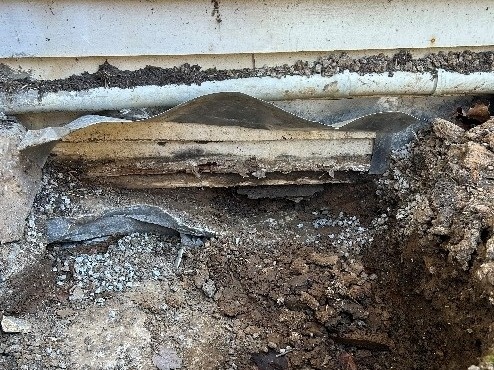
Rotted foundation board found at the rear wall, October 29, 2026.
October 2026
What the Crews Found
An old building keeps its secrets. Once workers began digging at the back of the church, they found rotted wood where the rear wall meets the ground, and a significant bow in the rear wall.
Our engineers knew the wall was leaning and had planned two new columns to tie it to the roof. But they had to guess at some hidden framing, and the foundation was designed without soil testing. Once the crew saw what was really there, the repair plan had to change.
November 2026
Choosing a Permanent Fix
Our architect presented three ways to fix the back foundation, and our contractor then proposed a fourth. The Board chose the fourth option because it is a permanent fix. The new steel must be made to fit, so on November 21, 2026, the Board approved a change order of $19,800 and 14 more days.
Option 1
New concrete foundation
Would last the longest, but could double the contract cost.
Option 2
New wood foundation
Would last about as long as a backyard deck and would be hard to keep dry.
Option 3
Repair what is there
Treated lumber would cost the least, but it would not last.
Option 4 ✓ Chosen
Structural steel on concrete piers
Proposed by our contractor, designed by our engineer and approved by our architect. A permanent fix that should last for many years.
Progress
The Work So Far
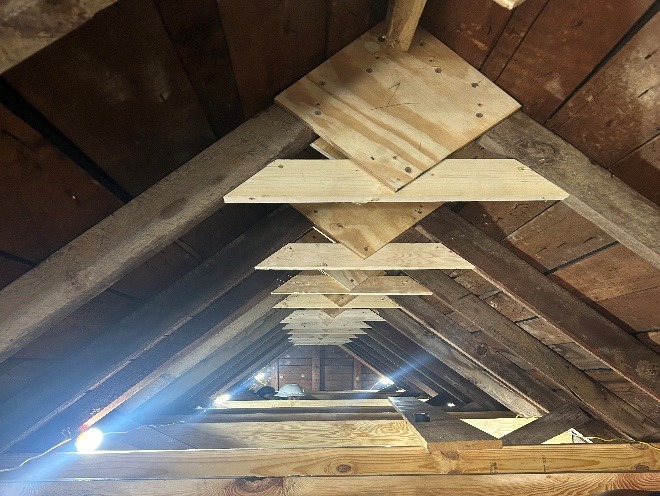
Work began with the roof structure. New lumber is being added to the existing roof trusses in the attic, and temporary steel channels and cables will pull the walls back into alignment before permanent connections are installed.
At the rear wall, structural steel on concrete piers will tie the wall into the floor structure, working with two new columns that tie it to the roof framing. Christman is ordering and fabricating the steel now.
New roof framing in the attic, November 3, 2026.
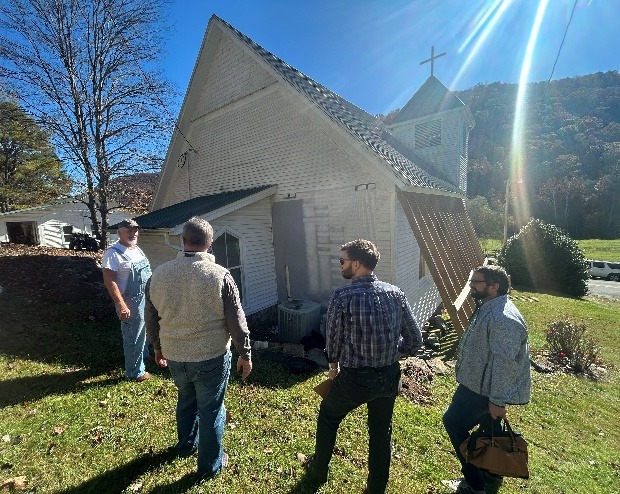
Architect, engineer and contractor review the rear wall on site, November 6, 2026.
Timeline
How We Got Here
June 2024
Temporary exterior bracing installed
June 2025
Rear addition (choir alcove) foundation repairs completed
July 2025
Grant application submitted to the Tennessee State Museum
October 2025
$100,000 state grant awarded
November 2025–April 2026
Architect and engineer design the repairs
Mid-October 2026
Construction begins and the museum closes
November 21, 2026
Board approves the permanent rear wall fix
March 14, 2027
Target date for substantial completion (we hope to finish sooner)
Delays
Why It Has Taken So Long
We hoped to start building in April 2026 and finish by the state’s original June 30 deadline. That did not happen. Construction prices came in higher than planned, licensed contractors are scarce in our area, and a building this old needed testing for asbestos, lead-based paint and other hazards.
The Tennessee State Museum has extended our grant deadline to March 31, 2027. With the approved change order, substantial completion is now set for March 14, 2027, and we hope to finish sooner.
The numbers
The Funding Gap
The $100,000 grant was our best estimate when we applied in 2025. Here is where the numbers stand today:
Architect and engineer fees$19,500
Hazardous materials testing (asbestos and lead-based paint)$3,350
Construction contract$110,500
Approved change order for the new rear wall$19,800
Totalabout $153,150
That is roughly $53,150 more than the grant. The $19,800 change order for the new rear wall design created a shortfall, and additional donations are needed to complete the project.
Still Ahead
The gap may grow. Beyond the current contract:
About $30,000 of work from our original grant application is not in the current contract.
Our design team expects another $50,000 to $100,000 of needed repairs.
Painting the outside and the roof, estimated at $35,000, is still unfunded.
Masonry cleaning, repair and tuckpointing will be pursued separately.
“With your help, the Vardy Church will be here for the next century.”
Fred Overbay Jr., VCHS Secretary & Treasurer
Thank you to the Tennessee State Museum, our contractor and design team, and the volunteers who have worked so hard to protect this place.
Help Us Close the Gap
Additional donations are needed to complete the church repairs and reopen the museum. Every gift, large or small, brings us closer. Please give by December 31 so your gift counts toward this tax year.
Know of a foundation, business or grant program that supports historic preservation? Please let us know.